
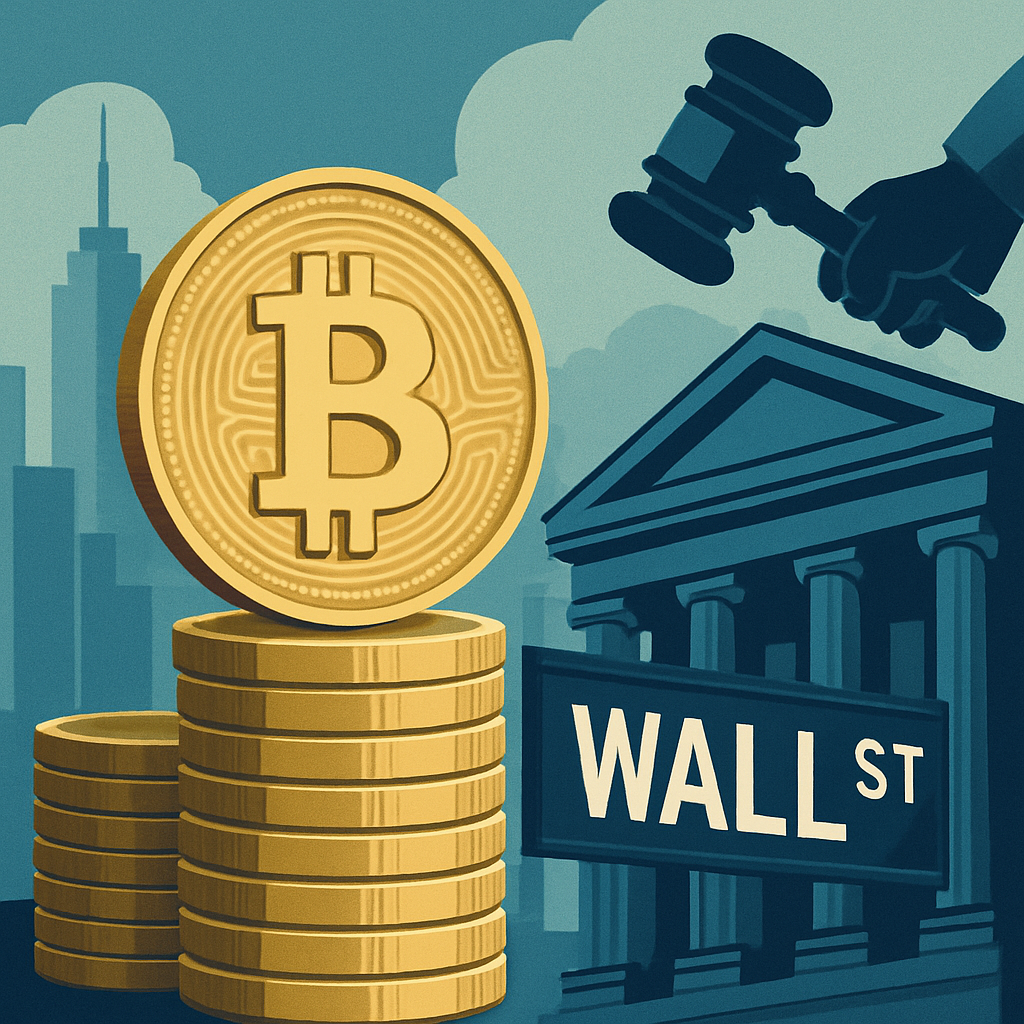
Crypto's Evolving Landscape: Wall Street, Regulation, and Market Dynamics
The crypto industry continues to evolve at a breakneck pace, with Wall Street and traditional markets increasingly taking cues from decentralized finance. As regulators scramble to keep up, the markets are positioning themselves for the next big move. Today's developments highlight the delicate dance between innovation and regulation, all while the major cryptocurrencies prepare for potential breakouts.
Regulatory Challenges and Market Moves
In a move that regulators wish had never occurred, the U.S. Securities and Exchange Commission (SEC) filed a lawsuit against Mining Automatic and its owner, Zan Shaikh, for allegedly running a $22 million Ponzi-style crypto mining operation. This incident serves as a stark reminder that despite industry progress, old-school fraud still lurks beneath the surface of shiny new Web3 projects.
Meanwhile, Bitcoin (BTC) and Ethereum (ETH) are quietly building momentum. Bitcoin is holding steady above $61,000, with traders eyeing a potential resistance break near $68,000. On the Ethereum front, the asset is consolidating near $1,870, with bullish sentiment growing as coins leave exchanges and staking activities increase. Both assets are positioning for a potential surge if technical conditions align.
Wall Street Meets Crypto
Traditional markets are increasingly influenced by crypto trading habits. The London Stock Exchange plans to launch a dedicated overnight trading venue, acknowledging that if crypto trades 24/7, stock exchanges must adapt. CoinShares is further bridging the gap by launching a European UCITS platform and a Bitcoin mining ETF, offering institutions index-style exposure to BTC miners.
In the realm of tokenized commodities, Tether Gold (XAUT) achieved a regulatory milestone in Abu Dhabi, highlighting the growing trend of integrating real-world assets with blockchain technology.
Global Regulatory Shifts
- Russia's parliament passed a landmark crypto law, framing Bitcoin as property for foreign trade.
- Brazil's securities regulator is drafting experimental rules for tokenized securities.
- The UK's lawmakers are investigating banks' restrictions on crypto firms, addressing potential competition issues.
- In the U.S., the CLARITY Act is moving forward, providing clearer regulatory boundaries for digital assets.
Elsewhere, consumer and DeFi developments are making waves. Telegram is preparing to introduce a native GRAM wallet, potentially becoming the largest self-custody rollout ever. Meanwhile, Morpho has launched Midnight, a fixed-rate lending protocol, backed by significant venture capital.
Key Takeaway: The crypto industry's evolution is no longer about survival; it's about who will control the infrastructure, define the rules, and remain resilient through the next market cycle. As traditional markets and regulators adapt, crypto continues to weave itself into the global financial fabric.
Comments
Comments
Post a Comment