
Crypto Talkies: Regulation, Stablecoins, and a Tale of Two Markets
Regulatory Tightening and the Stablecoin Dilemma
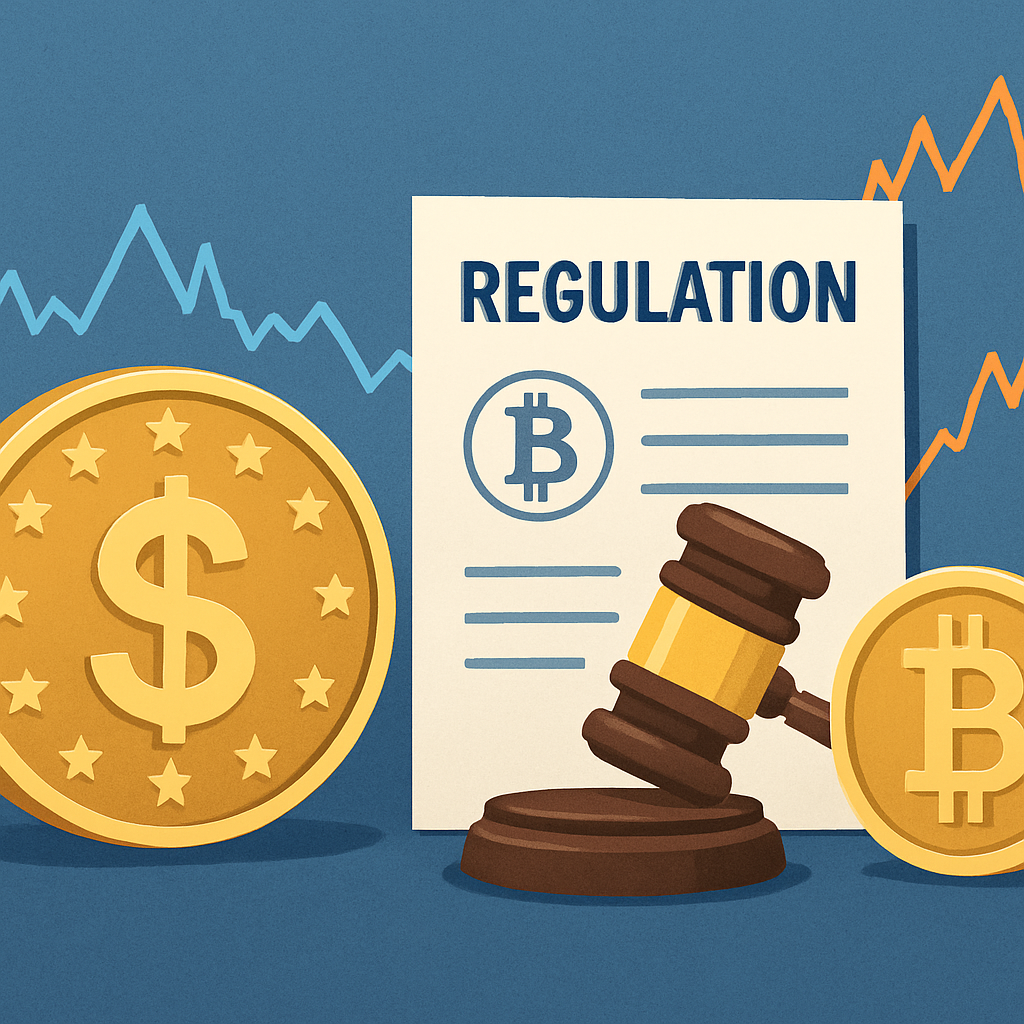
The cryptocurrency market is experiencing a seismic shift as regulators worldwide tighten their grip on stablecoins. A recent report by CEPR/LTI, supported by the Bank for International Settlements, highlights the inherent fragility of private stablecoins like USDT and USDC. The report suggests a pivot towards tokenized central bank and commercial bank money as a more stable alternative.
This regulatory push is already evident in India, where a crackdown on stablecoin transactions has led to USDT trading at an 8.5% premium. This premium reflects the difficulties in bringing stablecoins into the country, spotlighting the delicate balance regulators must strike between market strain and security risks.
Institutional Embrace of Tokenized Dollars
While regulatory challenges loom, institutions are making significant strides in adopting tokenized dollars. Hyperliquid’s transition from its USDH stablecoin to USDC, supported by a $10 million grant, marks a strategic pivot in the DeFi space. Concurrently, BNY Mellon’s integration of USDC services underscores the growing acceptance of tokenized dollars among traditional financial giants.
BlackRock's integration of Ethena’s synthetic dollar USDe into its Aladdin platform further signals institutional willingness to embrace digital dollar exposure. This move is a testament to the normalization of digital currencies within conservative financial systems, marking a new chapter in the crypto narrative.
Market Dynamics and Institutional Maneuvers
The broader market, however, is under pressure as Bitcoin and Ethereum prices lag amid ETF outflows and institutional sell-offs. Yet, beneath these price movements, institutions like SharpLink and Bitmine are quietly amassing Ethereum holdings, highlighting a strategic accumulation of crypto assets.
On the corporate front, MicroStrategy’s innovative Digital Credit Capital Framework showcases how Bitcoin can be leveraged as a flexible capital asset. In contrast, Loopring’s closure of its DEX and AMM illustrates the challenges of maintaining product-market fit amid rapid ecosystem changes.
- Kiwoom Securities explores acquiring shares in Bithumb, signaling traditional finance’s increased interest in crypto exchanges.
- Vitalik Buterin’s exploration of indistinguishability obfuscation hints at a future of private, on-chain governance.
Key Takeaway: As the crypto market faces regulatory pressures and price volatility, institutions are strategically positioning themselves in the digital landscape. The evolving stablecoin narrative and the integration of crypto in traditional finance highlight a market rich with potential, despite its current challenges.
Comments
Comments
Post a Comment