
Regulation, Reshuffles, and a Stablecoin Power Shift
In the ever-evolving world of cryptocurrency, there are days when the industry feels less like a tech experiment and more like a bustling, albeit chaotic, global market. Recent events have seen job cuts, regulators drawing clear boundaries, and stablecoins making significant moves against major cryptocurrencies.
The Rise of Stablecoins and Ethereum's Challenge
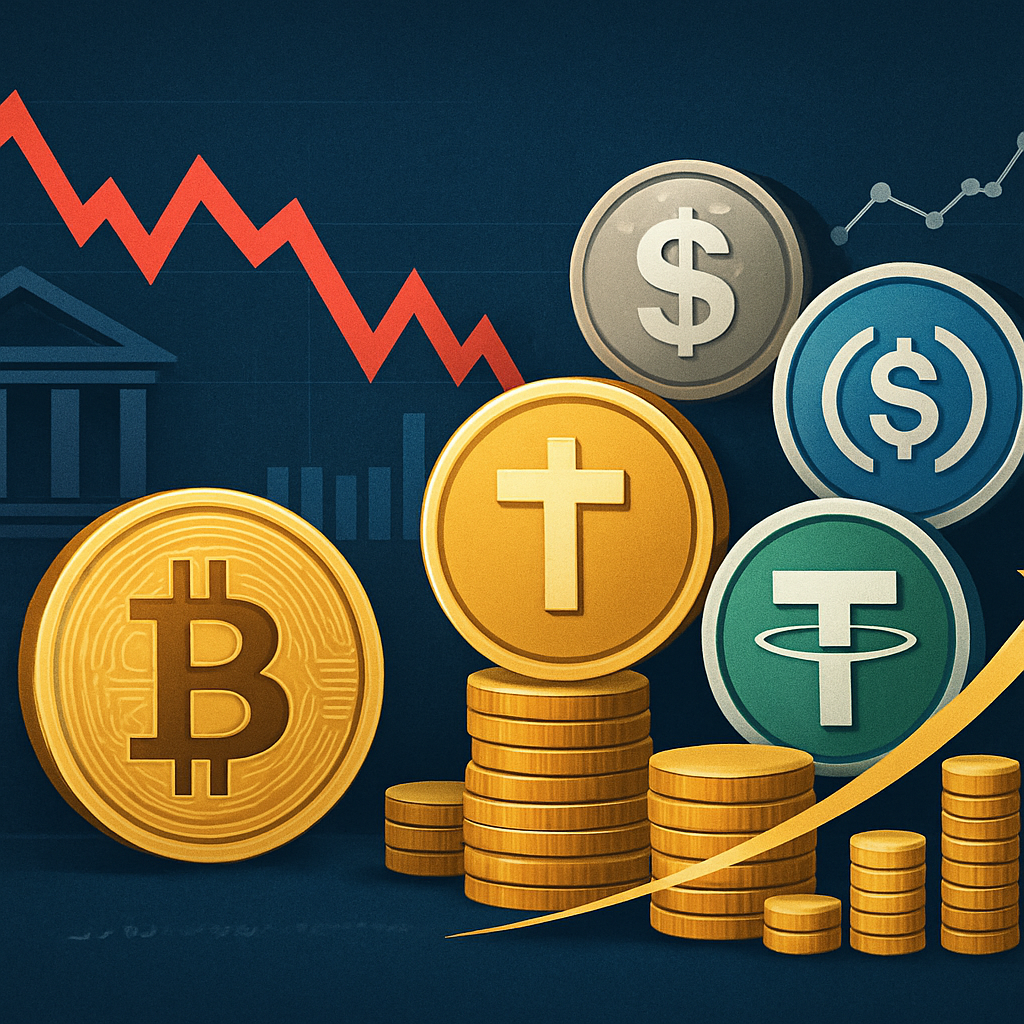
In a notable shake-up, Tether’s USDT briefly surpassed Ethereum (ETH) in market cap as ETH dipped toward the $1,500 mark. Although temporary, this event highlighted the growing importance of stablecoins, which are increasingly becoming central players rather than mere entry points into crypto markets. Meanwhile, Ethereum is facing mounting pressure from competitors and the challenges of regulation, testing its resilience at key support levels.
Despite the challenges, significant players like SharpLink are doubling down on Ethereum, recently acquiring 5,000 ETH after a pause in buying. CEO Joseph Chalom is optimistic about Ethereum's future, citing upcoming catalysts as proof of its enduring ecosystem value.
Regulatory Movements and Corporate Strategy Shifts
Regulation continues to be a defining factor. In Australia, the securities regulator has extended no-action relief for crypto firms, while Spain is enforcing strict compliance with the EU’s MiCA framework, signaling a varied global regulatory landscape. In the U.S., Ripple is proactively pushing for clearer federal guidelines, hoping to unlock new valuations for digital assets.
Corporate strategies are also under scrutiny. MicroStrategy's bitcoin-heavy approach is facing challenges as BTC's decline impacts its financial structure. Similarly, Coinbase-backed Base faced hiccups with a network outage, raising questions about the role of centralization in decentralized systems.
DeFi Deals and Public Market Initiatives
In the DeFi space, potential deals like Kraken’s interest in acquiring a stake in Aave demonstrate strategic moves to bridge centralized and decentralized finance. Meanwhile, public market initiatives like StablecoinX’s Nasdaq listing and Securitize’s upcoming NYSE debut highlight the ongoing integration of crypto with traditional finance markets.
However, challenges remain. Hyperliquid faces regulatory scrutiny in Singapore, illustrating the tension between growth ambitions and legal frameworks.
Key Takeaway: The crypto industry is at a crossroads, with stablecoins gaining prominence, regulatory landscapes shifting, and corporate strategies evolving. As the market matures, these dynamics underscore the complexity and potential of digital assets, even as they navigate regulatory and market challenges.
Comments
Comments
Post a Comment