
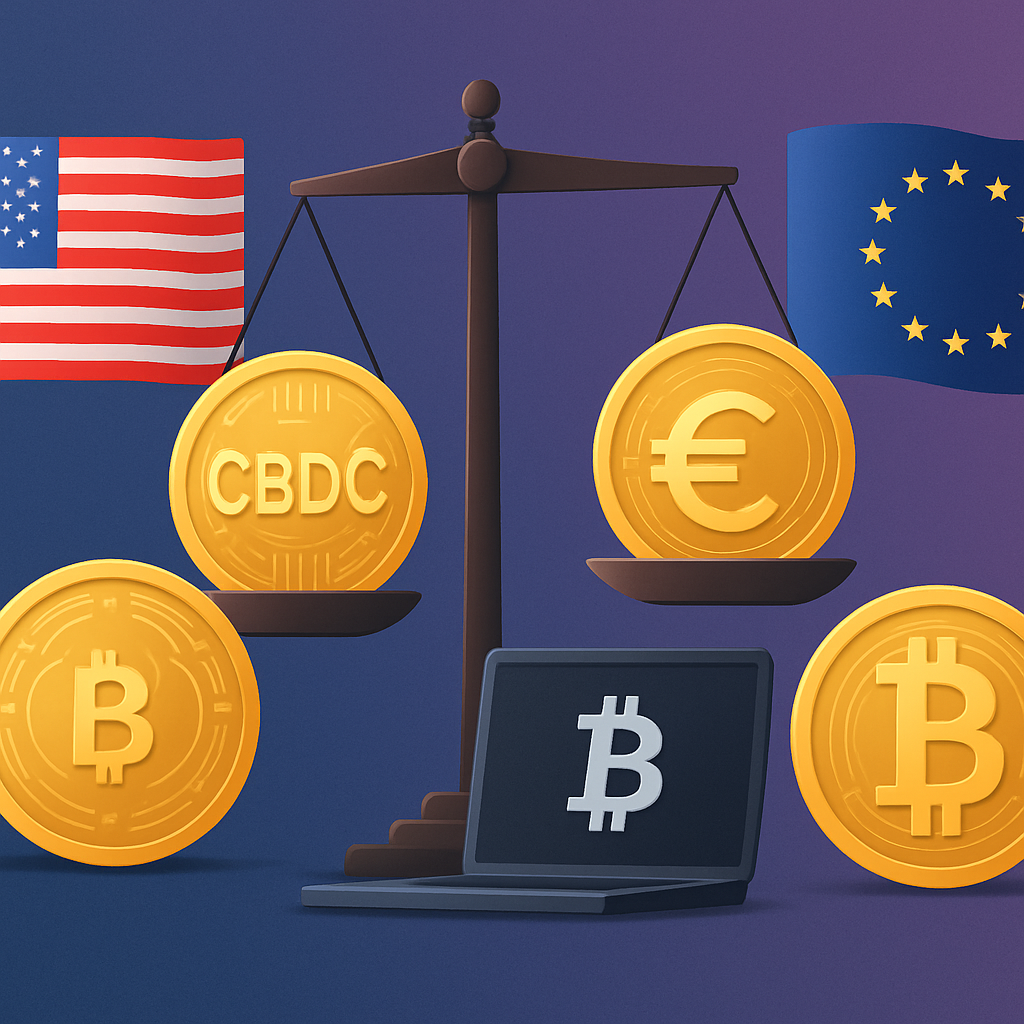
CryptoTalkies.net - A Tale of Two Continents: The U.S. Freeze on CBDCs vs. Europe's Digital Euro Race
The U.S. Hits Pause on Central Bank Digital Currencies
In a surprising twist, Washington has thrown a curveball at the digital currency landscape. The Senate recently passed a major housing bill that includes a four-year ban on the Federal Reserve issuing a central bank digital currency (CBDC) until 2030. Although the U.S. currently has no active digital dollar program, this legislative move signals a preference for private money systems, such as stablecoins and existing digital assets, over a state-run CBDC.
This decision gives private stablecoin issuers and crypto projects a sigh of relief, as they no longer have to compete with a potential Fed-backed digital dollar. As a result, the U.S. is charting a distinct path compared to other major economies, setting the stage for a unique crypto landscape.
Europe Accelerates Toward a Digital Euro
Meanwhile, across the pond, the European Central Bank (ECB) and EU lawmakers are full steam ahead with their digital euro initiative. The framework for the digital euro is set to function both online and offline, with a strong focus on privacy. This move aims to reduce Europe's reliance on U.S. payment systems and offer regulators a native tool to monitor financial flows.
As Europe embraces a state-backed digital euro, the rest of its crypto market is feeling the pressure. The European Securities and Markets Authority (ESMA) has mandated all unlicensed crypto exchanges and service providers to shut down under the new MiCA regulations. As the regulatory landscape tightens, well-capitalized, compliant players are poised to emerge as winners, while smaller, unregulated platforms may struggle to survive.
The Global Ripple Effect and New Opportunities
Some companies are taking proactive steps to navigate this evolving landscape. Ripple (XRP) has secured preliminary MiCA Crypto Asset Service Provider approval in Luxembourg, providing a strategic entry point into the European Economic Area. This approval positions Ripple to expand its crypto and stablecoin payment services across up to 30 countries, reinforcing its reputation as a compliant cross-border payment infrastructure.
Additionally, Europe is witnessing innovative banking experiments, such as Project Pangea, which involves Chainlink (LINK) and 47 banks across Europe and South Korea. This pilot aims to settle euro and won trades in real-time using regulated stablecoins, potentially transforming the traditional banking settlement process.
Key Takeaway: The global digital currency landscape is diverging, with the U.S. pausing its CBDC efforts while Europe accelerates its digital euro initiative. As private players gain breathing space in the U.S., Europe tightens its regulatory grip, creating distinct opportunities and challenges for crypto enthusiasts and investors worldwide.
Comments
Comments
Post a Comment